Airbnb's Nov. 20 house rules: what changes for your turnovers
TurnAudit Team · October 22, 2026 · Sources checked October 22, 2026
Airbnb is narrowing the checkout chores hosts can ask of guests. The change makes the line between normal cleaning and an unusual condition more important, not less.
In brief: The new policy applies to reservations booked on or after November 20, 2026. The house-rules editing and display changes began October 20. It does not make guests responsible for standard turnover cleaning, and it does not excuse damage beyond normal wear.
What changes on November 20?
Airbnb now puts seven standard house rules and additional reasonable requests together in its Listing editor. The standard rules cover overnight guest limits, quiet hours, events, pets, smoking, commercial photography, and locking up at checkout. Checkout instructions no longer have their own tab. Under the new policy, rules and requests must be disclosed in the designated listing section when the guest books; hosts cannot add new ones later through messages or signs. Airbnb's October 20 announcement and policy text explain the change.
Airbnb generally does not allow requests for work that takes significant effort or is normally done by a cleaner, such as stripping beds, taking trash off-site, or washing and putting away dishes. It says a host may instead ask guests to put used dishes in the sink, gather used towels, or sort trash into designated indoor bins. Context-specific exceptions may apply. Hosts also cannot impose their own fines or penalties through house rules. These are Airbnb policy examples, not a new local law.
What does not change?
Guests still have to follow the house rules and treat a home with care. Airbnb says guests should not leave a property needing excessive or deep cleaning, and it expects guests responsible for damage beyond normal wear to work with the host on a reasonable solution. But a host cannot charge a guest merely for skipping a particular checkout chore. Standard cleaning, such as laundry, dishes, and normal trash removal, is different from damage or unexpected extra cleaning. See Airbnb's guest ground rules and host damage protection guidance.
That distinction matters operationally. A sink of used dishes is not, by itself, a damage claim. A broken fixture or a stain requiring unusual cleaning is a different question, one the host must assess under the applicable terms. A recording can show visible condition; it cannot establish who caused it or whether Airbnb will approve a reimbursement request.
A practical turnover handoff
Review the listing rules now. Put any permitted house rules and reasonable requests in Airbnb's designated section before guests book. Do not rely on a late message or a sign in the home to add a new rule.
Record before the cleaner changes the scene. After checkout and safe access, film each room in a consistent order. Note visible exceptions without assigning blame.
Handle normal cleaning as the turnover team's work. Separate routine dishes, laundry, and trash from a possible safety issue, breakage, or unusual cleaning need.
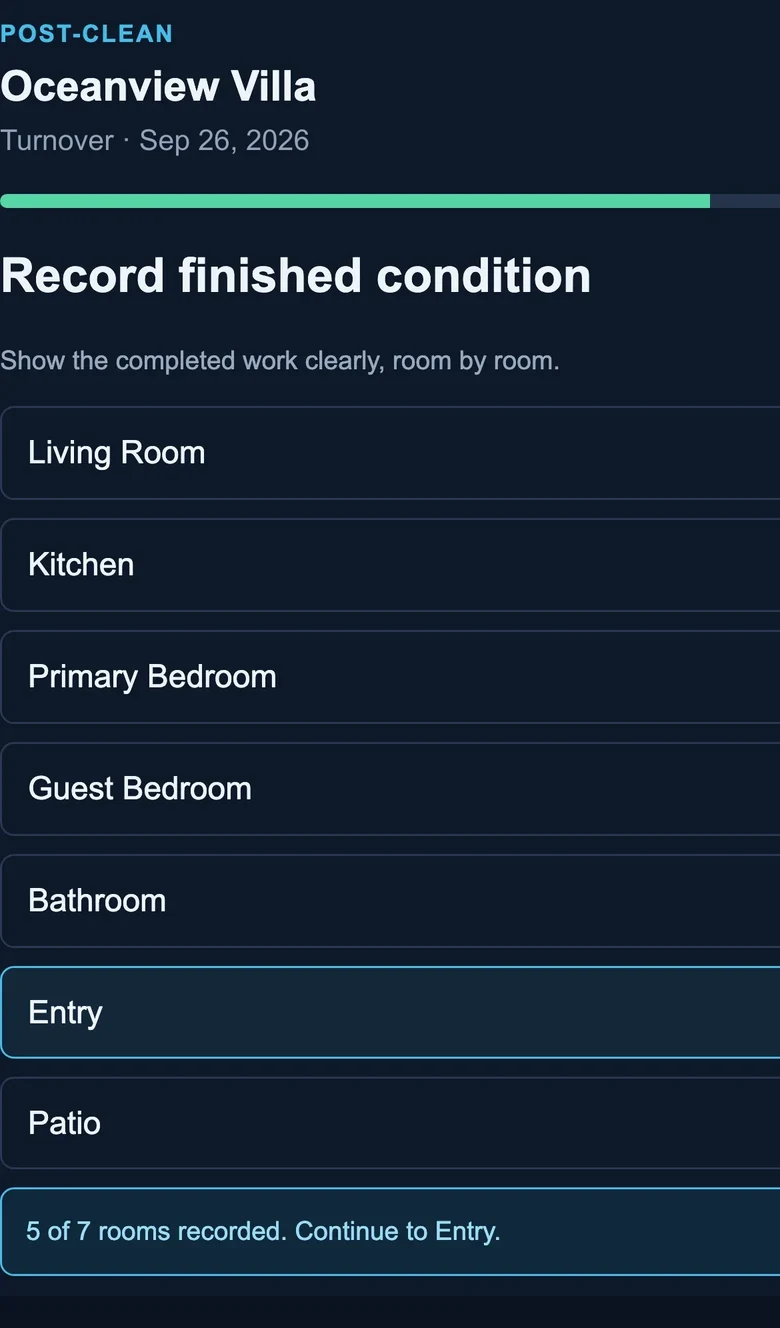
Record after cleaning. Capture the finished room condition before the next arrival. The host reviews any exception and decides what follow-up is appropriate.
Where TurnAudit fits
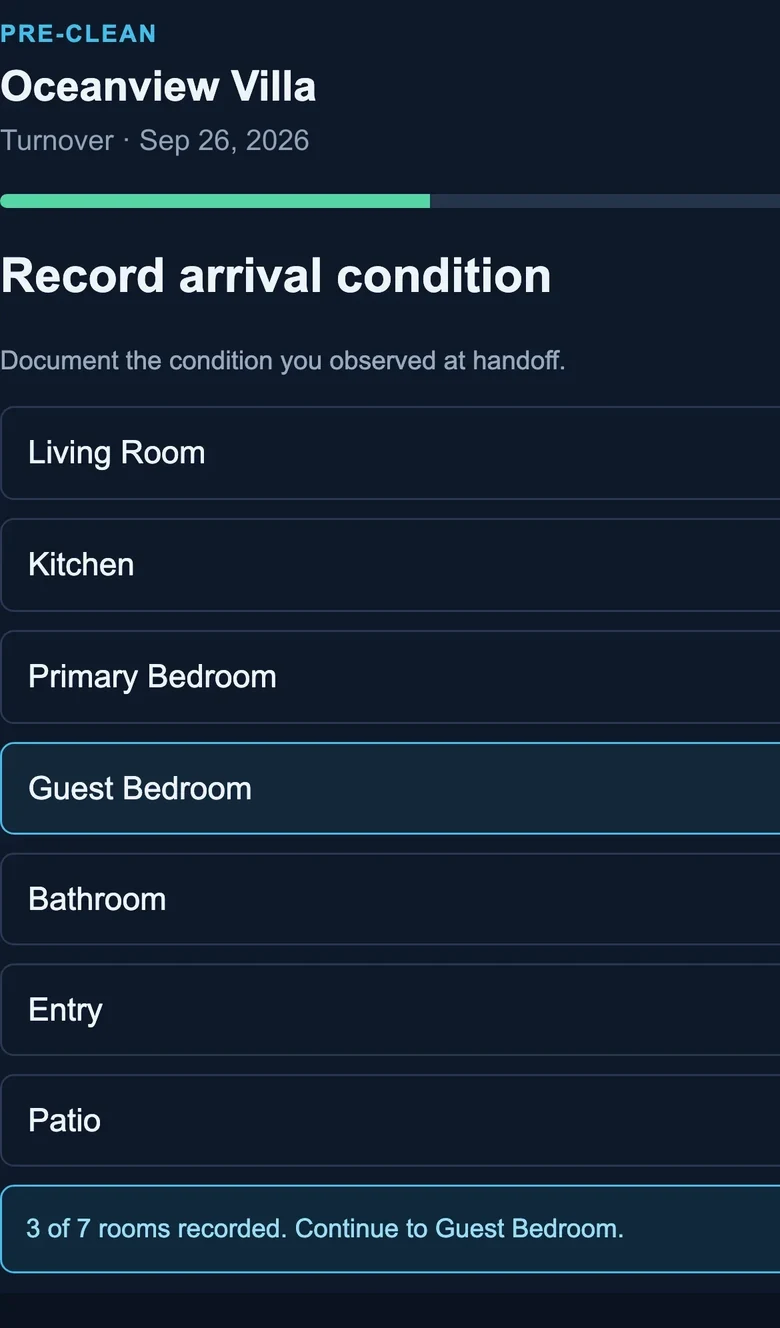
TurnAudit gives an invited cleaner a guided phone-browser flow to film rooms before cleaning and again afterward. A self-cleaning host can record directly. The uploaded originals are organized by property and turnover; TurnAudit preserves those originals and reports the status of its independent timestamp request. The host reviews the footage. Optional AI review is advisory and stays separate from the original. Product facts and limits.
Example product screen: record arrival condition before cleaning.Example product screen: record finished condition after cleaning.
TurnAudit does not manage Airbnb house rules, file reimbursement requests, certify cleanliness, identify a responsible guest, or replace a cleaner. The point is a consistent record of what the camera captured at two different moments, useful for a fair handoff and the host's own review.
Common questions
Do guests have to leave the home clean?
Airbnb says guests should not leave a home needing excessive or deep cleaning. That is different from requiring them to perform standard turnover chores. Hosts may not charge fees solely because a guest did not complete a particular cleaning task.
Can a host still ask guests to lock up?
Yes. Locking up at checkout is one of Airbnb's seven standard house-rule categories. The host should set it in the listing's designated section.
Will a pre-clean video settle a damage dispute?
No. It can document visible condition before cleaning changes it. Airbnb evaluates responsibility, eligibility, and supporting material under its own terms.
Normas de Airbnb del 20 de noviembre: qué cambia en tus rotaciones
Equipo TurnAudit · 22 de octubre de 2026 · Fuentes consultadas el 22 de octubre de 2026
Airbnb limita las tareas de salida que los anfitriones pueden pedir a los huéspedes. Ahora importa aún más distinguir la limpieza normal de una condición excepcional.
En resumen: La nueva política se aplica a reservas hechas a partir del 20 de noviembre de 2026. Los cambios para editar y mostrar las normas comenzaron el 20 de octubre. Los huéspedes no pasan a ser responsables de la limpieza normal de la rotación, pero siguen siendo responsables de los daños que superen el desgaste normal.
¿Qué cambia el 20 de noviembre?
Airbnb reúne siete normas estándar y las solicitudes razonables en el editor del anuncio. Las normas abarcan el número máximo de huéspedes que pernoctan, horas de silencio, eventos, mascotas, tabaco, fotografía comercial y cierre de la vivienda al salir. Las instrucciones de salida ya no tienen una pestaña separada. La nueva política exige mostrar las normas y solicitudes en la sección designada del anuncio cuando se hace la reserva; no se pueden añadir otras después por mensaje ni mediante carteles. Consulta el anuncio del 20 de octubre y la política de Airbnb.
En general, Airbnb no permite pedir tareas que requieran mucho tiempo o esfuerzo o que normalmente haga el personal de limpieza: quitar las sábanas, llevar la basura fuera de la propiedad o lavar y guardar los platos. Sí indica que se puede pedir dejar los platos usados en el fregadero, reunir las toallas usadas o separar la basura en contenedores interiores designados. Puede haber excepciones según el contexto. Tampoco se pueden imponer multas o sanciones propias mediante las normas. Son ejemplos de una política de Airbnb, no una ley local nueva.
¿Qué no cambia?
Los huéspedes deben seguir cumpliendo las normas y cuidar la vivienda. Airbnb indica que no deben dejarla en un estado que exija limpieza excesiva o profunda y que quienes causen daños superiores al desgaste normal deben buscar una solución razonable con el anfitrión. Pero el anfitrión no puede cobrar solo porque se omita una tarea concreta de salida. La limpieza habitual, como lavar ropa o platos y retirar la basura normal, es distinta de un daño o una limpieza adicional inesperada. Consulta las normas para huéspedes y la guía de protección por daños.
Esta diferencia importa en la rotación. Un fregadero con platos usados no constituye por sí solo un reclamo por daños. Una instalación rota o una mancha que exige limpieza extraordinaria plantea otra cuestión, que el anfitrión debe evaluar según los términos aplicables. Una grabación muestra el estado visible; no establece quién lo causó ni si Airbnb aprobará un reembolso.
Una entrega práctica entre estancias
Revisa ahora las normas del anuncio. Incluye las normas permitidas y las solicitudes razonables en la sección designada de Airbnb antes de la reserva. No añadas una norma nueva por mensaje tardío o por un cartel.
Graba antes de cambiar la escena. Tras la salida y cuando sea seguro entrar, filma cada habitación en un orden constante. Anota las condiciones visibles sin atribuir culpas.
Deja la limpieza normal al equipo de rotación. Separa los platos, la ropa y la basura habituales de posibles riesgos, roturas o necesidades de limpieza extraordinaria.
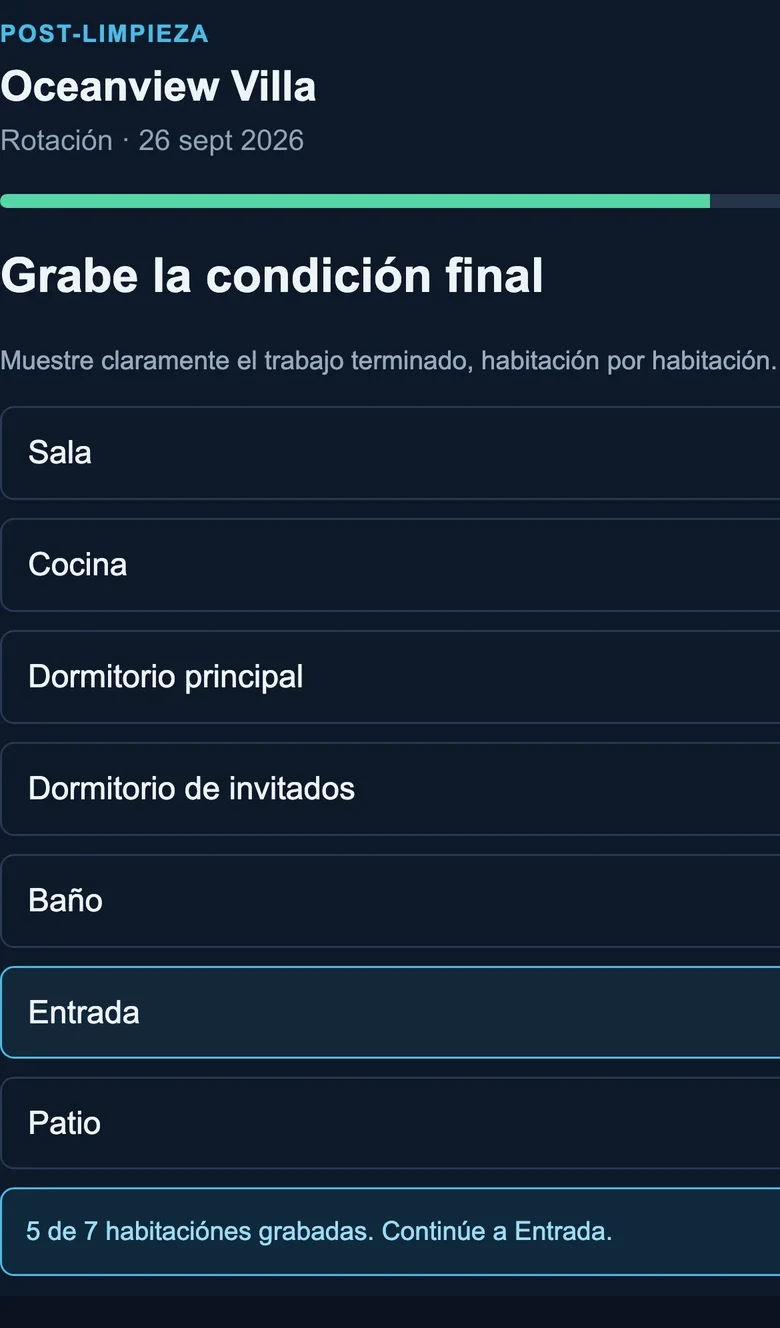
Graba después de limpiar. Documenta el estado final de las habitaciones antes de la siguiente llegada. El anfitrión revisa las excepciones y decide qué hacer.
Cómo encaja TurnAudit
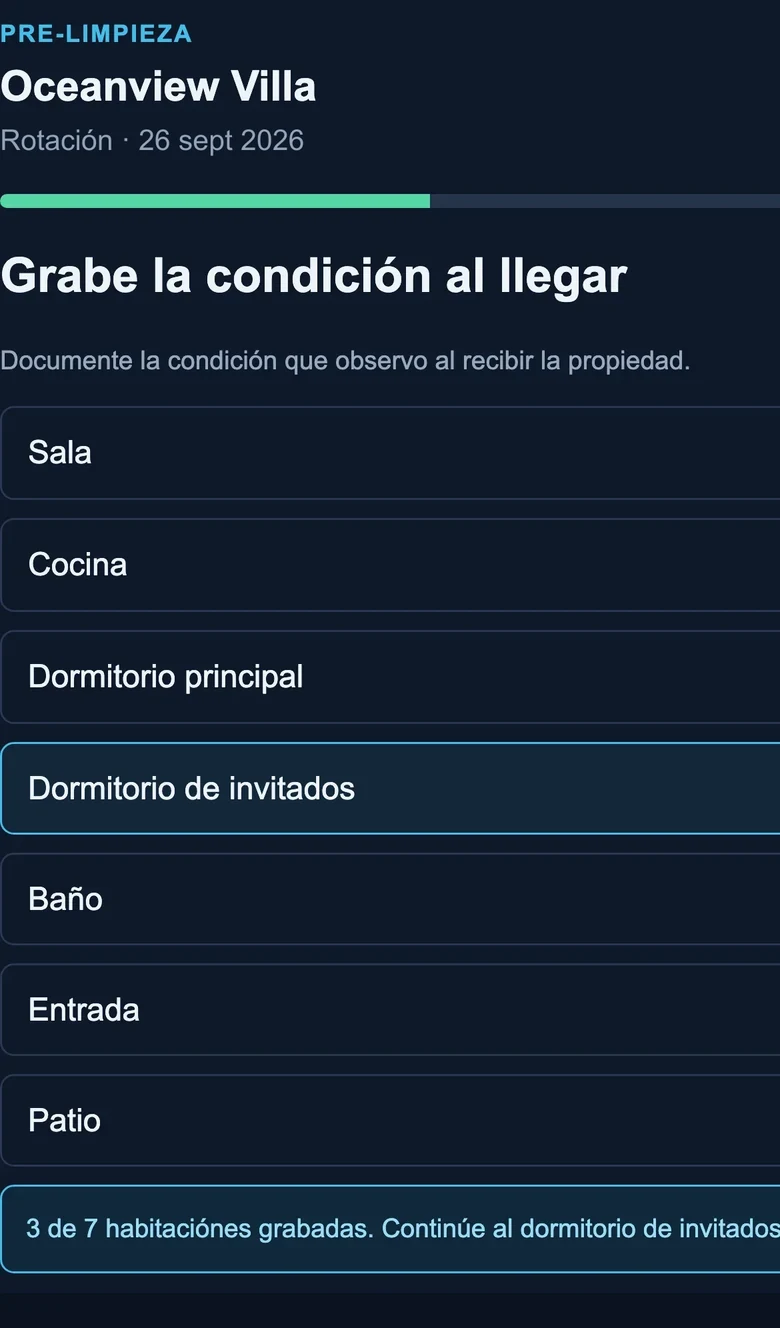
TurnAudit ofrece al personal de limpieza invitado un flujo guiado en el navegador del teléfono para filmar las habitaciones antes y después de la limpieza. Un anfitrión que limpia por su cuenta también puede grabar. Los originales subidos se organizan por propiedad y rotación; TurnAudit conserva esos originales e informa del estado de la solicitud de sello de tiempo independiente. El anfitrión revisa el video. La revisión opcional por IA es orientativa y permanece separada del original. Funciones y límites del producto.
Pantalla de ejemplo: documentar el estado al llegar, antes de limpiar.Pantalla de ejemplo: documentar el estado final tras limpiar.
TurnAudit no administra las normas de Airbnb, presenta solicitudes de reembolso, certifica la limpieza, identifica al huésped responsable ni sustituye al personal de limpieza. Su función es conservar un registro uniforme de lo que captó la cámara en dos momentos distintos para una entrega justa y la revisión del anfitrión.
Preguntas frecuentes
¿Deben los huéspedes dejar limpia la vivienda?
Airbnb indica que no deben dejarla en un estado que exija limpieza excesiva o profunda. Eso es distinto de exigirles las tareas normales de rotación. No se les puede cobrar solo por no completar una tarea de limpieza concreta.
¿Puede el anfitrión pedir que cierren la vivienda?
Sí. Cerrar la vivienda al salir es una de las siete categorías de normas estándar de Airbnb. Debe configurarse en la sección designada del anuncio.
¿Resuelve una disputa una grabación anterior a la limpieza?
No. Puede documentar el estado visible antes de que la limpieza lo cambie. Airbnb evalúa la responsabilidad, la elegibilidad y los documentos de respaldo según sus propios términos.